The Hidden Costs of Not Knowing Which Ads Drive Your WhatsApp Leads
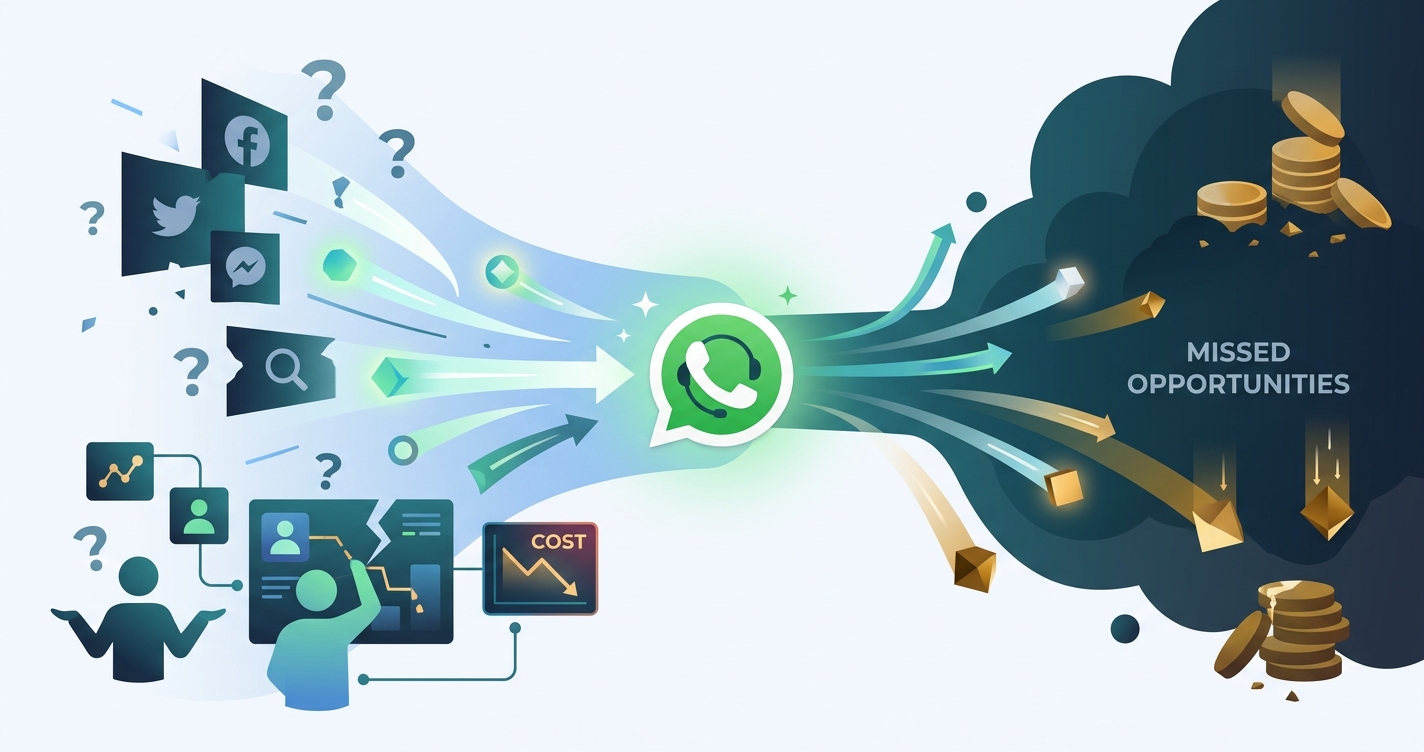
Why attribution matters more than ever for WhatsApp marketing
Attribution is the linchpin of effective WhatsApp marketing. With recent changes to WhatsApp’s pricing model, every conversation has a potential cost, raising the stakes for tracking exactly which campaigns drive valuable leads.
For marketers used to web forms or call tracking, WhatsApp presents new attribution challenges:
- No forms, no cookies: Web leads can be tracked via hidden fields or analytics tags. WhatsApp conversations are not inherently tied to the ad or webpage that sparked them.
- First-message blind spots: Only Click to WhatsApp ads on Meta directly relay metadata for the first message. Beyond that initial contact, the trail goes cold.
- Cross-platform confusion: If a Google Ads click eventually turns into a WhatsApp conversation, there is no native connection, making it difficult to know which channel truly performed.
When attribution is missing, chaos follows:
- Algorithms optimize for the wrong signals: Meta Ads and Google Ads can only optimize what they measure. If they can’t see which clicks turn into real conversations or sales, their algorithms waste your ad budget on clicks that go nowhere.
- Campaign scaling becomes a gamble: Agencies and business owners cannot confidently increase spending on the best creatives or ad sets without clear evidence of which ads lead to sales.
In essence, success with WhatsApp advertising now depends not just on driving conversations, but on knowing which ads generated those conversations and which of those conversations became customers.
The real financial cost of poor attribution
The hidden financial losses from “flying blind” with WhatsApp ad attribution add up fast. It is not just about message fees—it is about every misallocated dollar in your ad budget.
- Wasted ad spend: Without clear traceability, it is easy to double down on campaigns or ads that generate clicks but not real, high-quality WhatsApp conversations.
- Budget stuck in underperformers: Agencies and SMBs often keep spending on channels that deliver a lot of activity but few true leads, quietly eroding their return on investment.
- Missed WhatsApp upside: High-quality WhatsApp leads often convert at a much higher rate than other channels. If attribution gaps cause these campaigns to be undervalued, real growth is left on the table.
- Inaccurate lead counts: Not knowing which leads come from which source means agencies risk both overcounting (crediting multiple ads for the same lead) or undercounting (missing leads completely). Both errors can send budgets into a death spiral.
Consider these realities:
- Well-placed WhatsApp buttons often generate significantly higher click-through rates than alternatives like SMS, but only if you know which buttons on which pages are working.
- Businesses that implement proper feedback loops can see a dramatic drop in their cost per qualified lead, as ad platforms learn to target better prospects.
- While platforms may offer an initial number of free conversations, inefficient campaigns can quickly exhaust these credits and drive up costs for low-quality interactions.
These examples underscore a simple truth: every blind spot in your attribution framework directly drains your ad budget.
Lead quality decay and operational friction
Technical gaps in WhatsApp attribution do not just waste money—they erode lead quality and create workflow bottlenecks.
- Chasing low-value leads: Without campaign-level tracking, teams waste time following up with unqualified leads, missing the high-intent ones from the best ads.
- Manual sorting headaches: Many teams revert to copying WhatsApp chat data into spreadsheets, manually trying to match conversations to ad clicks. This process is slow, error-prone, and does not scale.
- Assignment errors and follow-up lag: When attribution is unclear, teams struggle to distribute leads or prioritize prospects. Leads slip through the cracks and conversion rates decline.
- The snowball effect: Each misattributed lead compounds the chaos. What is a mild inconvenience at 10 leads a week becomes a serious revenue leak at 100.
- Compliance risks: Poor segmentation can lead to over-messaging contacts, creating a poor user experience and potentially violating communication policies.
For example, broadcast messages sent to poorly filtered lists often suffer from low delivery rates. Without clear attribution, you cannot effectively segment your audience, leading to wasted effort and higher costs.
Practical steps to improve WhatsApp ad attribution
Modern campaign managers have options to reclaim attribution and budget without significant technical overhead.
1. Understand Click to WhatsApp metadata and its limits Meta’s Click to WhatsApp ads provide campaign and ad set metadata on the first message, but not beyond. If a user waits and starts a separate conversation, or forwards the WhatsApp number to a friend, this linkage breaks.
2. Add UTM parameters and on-site analytics Simple UTM tagging on all inbound links (from Google Ads, Meta Ads, landing pages, or email) enables basic session-based tracking. Use analytics tools to log visits and handoff points, such as a user clicking a WhatsApp button after arriving from a specific ad campaign. This is essential for tracing journeys from Google Ads to WhatsApp.
3. Explore no-code and low-code attribution tools A number of tools now allow marketers to bridge the gap between web clicks and WhatsApp messages without requiring deep technical expertise. Look for solutions that can be implemented with a simple JavaScript snippet or dashboard connection.
4. Audit your current lead flow for dead zones Map the end-to-end customer experience. Identify who clicks which ad, what button or landing page they use, and exactly where the tracking breaks down. Pay particular attention to multi-touch journeys where a user might click a Google ad, browse your site, and then contact you via WhatsApp later.
5. Plan for the future of the ad ecosystem Meta continues to roll out new pricing models and API capabilities. At the same time, data privacy standards are tightening across the industry. Having a robust and flexible tracking strategy is essential for adapting to these changes.
By acting now, you can close dangerous attribution gaps, plug budget leaks, and build workflows that thrive as WhatsApp’s role in advertising matures.
How HeyMotek addresses this
HeyMotek bridges the attribution gap between your Google Ads or Meta Ads campaigns and every WhatsApp conversation your business receives. The platform automatically matches each incoming WhatsApp message to its originating ad click, campaign, and source—whether the lead came from a Click to WhatsApp ad or a Google Ads click routed through your site. This means you see every lead’s real journey without manual spreadsheet work.
When a conversation becomes a sale, HeyMotek sends that conversion event back to both Google Ads and Meta Ads. This gives each platform a clear picture of what works, allowing them to optimize for revenue, not just clicks. While Meta’s default tracking stops after the first message, HeyMotek traces the full journey from ad to sale.
All this data is visible in a dashboard that shows each lead’s ad source, campaign, and initial message. You can connect your Google Ads and Meta Ads accounts directly, and HeyMotek works with new or existing WhatsApp numbers, including those managed by other providers.
With every campaign traced to the moment of sale, your ad platforms learn to spend your budget more effectively. Agencies can finally show clients exactly which campaigns delivered real results, and small business owners can stop guessing which ads are working. Start Tracking and make every WhatsApp lead count.
See which ads bring your real WhatsApp customers.
Free plan. No credit card required 👏
Start for freeRelated integrations